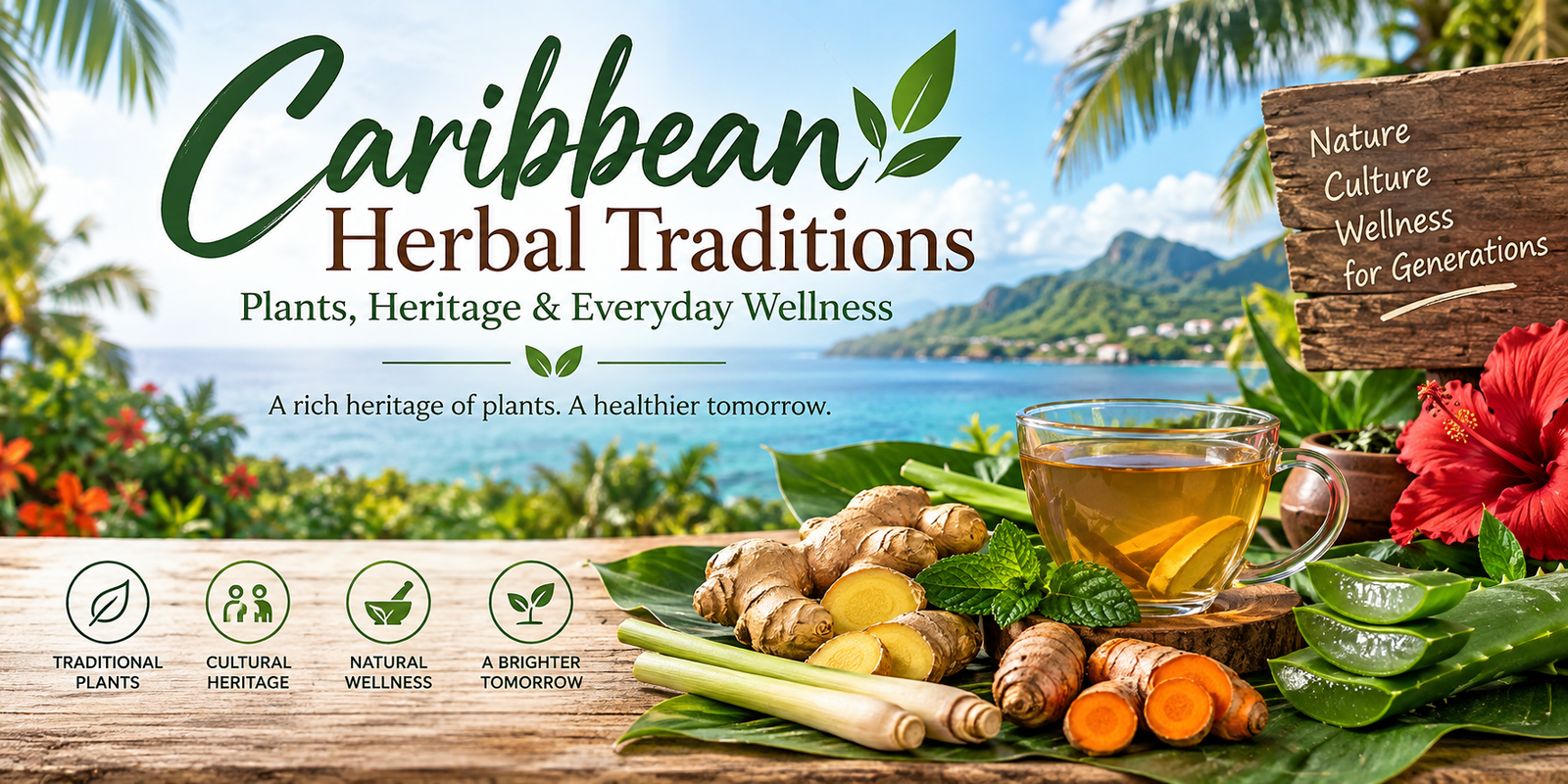
Caribbean herbal traditions are deeply connected to the region’s plants, culture, food, and generations of traditional knowledge. Across the islands, herbs, roots, leaves, fruits, and spices have been used in everyday household practices and traditional wellness rituals for centuries.
From soothing herbal teas and aromatic spices to plants grown in home gardens, Caribbean herbs and botanicals represent a unique relationship between people and nature. This heritage has been shaped by Indigenous Caribbean knowledge as well as African, European, Indian, and other cultural influences.
Today, growing interest in natural wellness, herbal products, botanical ingredients, and traditional plant-based practices is bringing renewed attention to the rich herbal heritage of the Caribbean.
Note: Traditional herbal use is not the same as established medical evidence. Herbal products should be used responsibly, and anyone taking medications or managing a health condition should consult a qualified healthcare professional before using concentrated herbal preparations or supplements.
What Are Caribbean Herbal Traditions?
Caribbean herbal traditions refer to the traditional knowledge and practices surrounding the use of plants and botanicals throughout the Caribbean.
Historically, families and communities learned about local plants through observation and generations of shared knowledge. Plants were incorporated into cooking, beverages, household practices, personal care, and traditional wellness routines.
Because the Caribbean consists of many different islands and cultures, there is no single Caribbean herbal tradition. Instead, there is a diverse collection of island-specific herbal practices, plant names, preparation methods, and cultural traditions.
This diversity is one of the most fascinating aspects of Caribbean herbal heritage.
The Cultural Heritage Behind Caribbean Herbs
The Caribbean has a complex cultural history, and its botanical traditions reflect this diversity.
Indigenous peoples developed knowledge of native plants long before European colonization. African communities brought their own extensive understanding of medicinal and food plants, while later migration from India and other regions introduced additional botanical traditions.
Over generations, these different forms of knowledge interacted with the Caribbean environment.
The result is a rich botanical heritage in which plants may have different names and traditional applications depending on the island or community.
Caribbean Herbal Knowledge Passed Through Generations
Much of this knowledge was traditionally shared within families and communities.
Grandparents, parents, farmers, traditional practitioners, and community elders played important roles in teaching younger generations about:
- Local herbs and plants
- How plants were traditionally prepared
- When plants were harvested
- Herbal teas and infusions
- Culinary uses of herbs and spices
- Traditional household wellness practices
- Sustainable relationships with the natural environment
This makes Caribbean herbal medicine and plant knowledge more than a collection of ingredients—it is also an important part of cultural heritage.
Popular Plants in Caribbean Herbal Traditions
The tropical Caribbean environment supports a wide variety of aromatic, culinary, and traditionally used plants. Several have become particularly well known both within the region and internationally.
1. Ginger
Ginger is one of the most recognizable botanicals associated with traditional Caribbean food and wellness practices.
Its naturally warming flavor makes it popular in teas, cooking, juices, and herbal preparations. Ginger is traditionally enjoyed as part of digestive and general wellness routines.
Modern research has also investigated ginger and its naturally occurring compounds, although traditional use should not be interpreted as proof that ginger treats a particular disease.
2. Turmeric
Turmeric is particularly interesting because its history demonstrates the cultural exchange that has shaped Caribbean herbal traditions.
Introduced and popularized through South Asian communities, turmeric has become an important culinary and botanical ingredient in parts of the Caribbean.
Its bright golden color comes largely from naturally occurring compounds known as curcuminoids, including curcumin.
Today, turmeric is widely used in food, teas, botanical blends, and wellness products.
3. Lemongrass
Lemongrass is appreciated for its fresh citrus aroma and flavor.
A simple lemongrass herbal tea can be prepared by steeping the leaves or stalks in hot water. The resulting beverage is often enjoyed as part of a relaxing daily routine.
Beyond traditional Caribbean use, lemongrass has become popular worldwide as a culinary herb and botanical ingredient.
4. Aloe Vera
Aloe vera is a familiar tropical plant that can often be found growing around homes and gardens.
The plant’s succulent leaves contain a clear gel that has traditionally been used in various topical and personal-care practices.
Aloe vera is now widely incorporated into skincare and wellness products, although different preparations of aloe can have very different properties and uses.
5. Moringa
Moringa has attracted global attention because of its nutritional profile.
Its leaves are traditionally consumed as food in various tropical regions and may be incorporated into meals, teas, or botanical preparations.
Moringa is a good example of the connection between traditional food plants and everyday wellness.
6. Cerasee
Cerasee is one of the better-known plants in Caribbean folk herbal traditions. The name is commonly associated with bitter melon (Momordica charantia), although local naming and plant identification can vary.
Traditionally, cerasee has been prepared as an herbal infusion in some Caribbean communities.
Because botanical names and traditional names can vary between regions, accurate plant identification and responsible sourcing are especially important when working with traditional herbs.
Caribbean Herbal Tea Traditions
One of the easiest ways to appreciate Caribbean botanical culture is through herbal teas and botanical infusions.
Traditional herbal beverages may include ingredients such as:
- Ginger
- Lemongrass
- Mint
- Turmeric
- Moringa
- Cinnamon
- Local leaves and botanicals
These beverages can form part of everyday routines rather than being viewed solely as medicinal preparations.
A warm herbal infusion in the morning or evening can provide a simple way to enjoy the aroma, flavor, and cultural heritage associated with Caribbean botanicals.
Caribbean Herbs and Modern Natural Wellness
Interest in natural wellness has created a growing market for botanical ingredients.
Consumers are increasingly interested in:
Plant-based ingredients • Herbal teas • Botanical extracts • Traditional herbs • Natural personal care • Wellness rituals • Responsibly sourced botanicals
This has created opportunities for traditional Caribbean plants to be used in modern wellness products.
However, preserving the integrity of these traditions is important.
Modern products should clearly distinguish between traditional use, nutritional benefits, and scientifically established health claims.
Responsible herbal wellness does not require choosing between tradition and science. Instead, it can involve appreciating traditional knowledge while using modern research, quality control, and responsible manufacturing to better understand botanical ingredients.
Why Botanical Sourcing Matters
As interest in Caribbean herbs increases, sustainable sourcing becomes increasingly important.
Many traditional plants are collected from agricultural land, home gardens, forests, or natural environments. Unsustainable harvesting can place pressure on local ecosystems and reduce the availability of important plants.
Responsible botanical sourcing can help:
- Protect biodiversity
- Support local growers
- Preserve traditional plant knowledge
- Encourage sustainable cultivation
- Maintain the quality of botanical ingredients
- Support Caribbean communities and agricultural traditions
For consumers, choosing products that provide information about ingredient sourcing, quality, processing, and responsible manufacturing can be an important part of making informed wellness choices.
Preserving Caribbean Herbal Heritage
Traditional plant knowledge can easily be lost when it is not documented or shared with younger generations.
Preserving Caribbean herbal heritage means protecting both the plants and the knowledge surrounding them.
Community education, botanical research, sustainable agriculture, cultural documentation, botanical gardens, and intergenerational storytelling can all contribute to preserving this heritage.
The future of Caribbean herbal traditions does not have to be a choice between traditional knowledge and modern science.
Both can contribute to a better understanding of botanical ingredients when approached with respect and appropriate evidence.
Incorporating Caribbean Botanicals Into Everyday Wellness
You don’t need an elaborate wellness routine to appreciate Caribbean botanical traditions.
Simple practices can include:
Enjoying Herbal Infusions
Prepare a caffeine-free herbal infusion using appropriate culinary or traditionally used botanicals and enjoy it as part of a relaxing daily routine.
Cooking With Herbs and Spices
Ginger, turmeric, cinnamon, lemongrass, and other aromatic ingredients can add distinctive flavors to everyday meals.
Growing Herbs at Home
Growing herbs in a garden, balcony, or small container can create a direct connection with plants and encourage greater awareness of where botanical ingredients come from.
Learning About Plant Heritage
Exploring the traditional names, cultural history, and regional uses of Caribbean plants can help deepen appreciation for the people and communities behind these traditions.
Choosing Quality Botanical Products
When purchasing herbal products, look for transparent ingredient information, responsible sourcing, appropriate quality standards, and clear directions for use.
Tradition Meets Modern Wellness
The growing interest in Caribbean herbal traditions reflects a broader movement toward reconnecting with nature and traditional approaches to everyday wellness.
But the value of these traditions extends beyond their potential wellness applications.
They tell stories about migration, culture, biodiversity, food, family, community, and the relationship between people and plants.
Every herb has a story.
Ginger reflects centuries of culinary and botanical exchange. Turmeric represents the influence of South Asian communities. Local Caribbean plants preserve Indigenous and African knowledge. Herbal teas bring traditional ingredients into everyday household rituals.
Together, these traditions form a living botanical heritage.
A Living Caribbean Botanical Heritage
Caribbean herbal traditions are much more than a collection of herbs used in traditional remedies.
They represent generations of knowledge about plants and their place in everyday life.
As modern consumers become increasingly interested in herbal wellness, plant-based living, natural ingredients, and botanical products, Caribbean herbs offer an opportunity to explore this heritage while respecting its cultural origins.
The future of Caribbean herbal wellness lies in finding a responsible balance between tradition, science, sustainability, and modern quality standards.
By learning where botanical traditions come from—and respecting the communities that preserved them—we can appreciate Caribbean plants not only for their natural qualities but also for the stories, knowledge, and heritage they represent.
Frequently Asked Questions
What are Caribbean herbal traditions?
Caribbean herbal traditions are traditional plant-based practices involving herbs, roots, leaves, fruits, spices, and botanical preparations that have been passed through generations across Caribbean communities.
What herbs are commonly associated with Caribbean herbal traditions?
Commonly discussed Caribbean botanicals include ginger, turmeric, lemongrass, aloe vera, moringa, cerasee, mint, and various locally used plants. Traditional use can vary significantly between islands and communities.
What are Caribbean herbal teas?
Caribbean herbal teas are beverages made by steeping herbs, leaves, roots, spices, or other botanicals in hot water. Ginger, lemongrass, mint, and other plants are commonly used in traditional and modern preparations.
Are Caribbean herbs safe to use?
Safety depends on the specific plant, preparation, quantity, and individual circumstances. Some herbs can interact with medications or may not be appropriate during pregnancy or for certain health conditions. Always identify botanicals correctly and seek professional advice when using concentrated herbal products.
Is traditional herbal use scientifically proven?
Not necessarily. Traditional use provides valuable cultural and historical information, but it does not automatically establish clinical effectiveness or safety. Individual herbs and their compounds need to be evaluated through appropriate scientific research.
Why is sustainable sourcing important for Caribbean herbs?
Sustainable sourcing helps protect biodiversity, reduce pressure on wild plant populations, support local growers, and preserve the availability of important botanical resources for future generations.
How can I incorporate Caribbean botanicals into my wellness routine?
Depending on the botanical, you can explore culinary uses, traditional herbal infusions, home gardening, or professionally formulated botanical products. Always follow product directions and consider potential interactions when using concentrated herbal preparations.


Leave a Reply